
They call it 'The Cherrapunji of South India', and for good reason. Agumbe is a lush, untouched rainforest paradise tucked away in Karnataka's Western Ghats. It's a world of misty mountains, tumbling waterfalls, and famous monsoons, making it the perfect escape for anyone who loves nature, trekking, or just wants a bit of peace and quiet.
Welcome to Agumbe: The Rainforest Jewel of South India
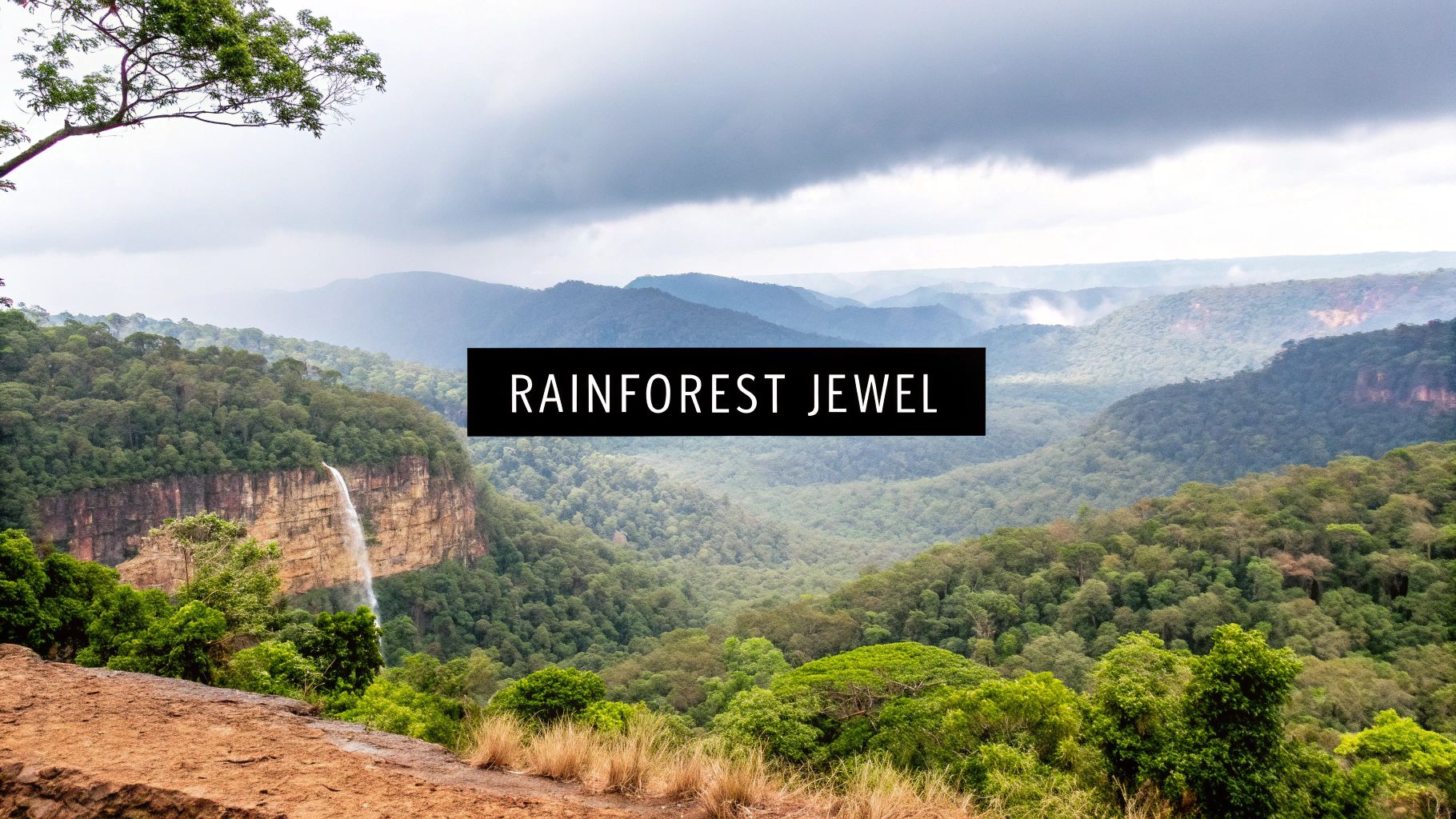
Picture a place painted in every shade of green you can imagine, where the clouds drift down to meet the treetops and the air is filled with the sounds of the rainforest. That's just a normal day in Agumbe, a tiny village with a massive role in India's ecology. These aren't just forests; they're a living, breathing ecosystem bursting with life.
What really sets this Agumbe hill station apart is its legendary relationship with rain. It’s one of the wettest places in the country, with an average annual rainfall of around 7,640 mm. Back in August 1946, it set a record for the highest rainfall in a single month in India, an incredible 4,508 mm.
To give you a quick overview, here's a snapshot of what to expect when planning your visit.
Agumbe Hill Station At a Glance
This table gives you the essential details to help you get started on your Agumbe adventure.
| Attribute | Details |
|---|---|
| Location | Shivamogga District, Karnataka, India |
| Famous For | Rainforests, Heavy Rainfall, Waterfalls, King Cobra |
| Best Time to Visit | October to February (Post-monsoon for lush greenery) |
| Things to Do | Trekking, Photography, Wildlife Spotting, Sunset Viewing |
| Nearest Airport | Mangalore International Airport (approx. 95 km) |
| Nearest Railway Station | Udupi (approx. 50 km) & Shivamogga (approx. 90 km) |
This little summary should help you figure out the best time to go and what you can look forward to.
What Makes Agumbe So Special?
The real magic of Agumbe is its raw, untamed beauty. It hasn't been commercialised like other hill stations, so you get a genuine connection with nature. The experience here is less about crowded tourist spots and more about soaking in the environment.
Here are a few highlights that keep travellers coming back:
- Breathtaking Vistas: The famous Sunset View Point provides incredible panoramic views of the Western Ghats. On a clear day, you can watch the sun dip right into the Arabian Sea.
- Thundering Waterfalls: During the monsoon, countless waterfalls come to life. Barkana Falls, Onake Abbi Falls, and Jogi Gundi Falls are just a few, and each offers its own unique trekking trail.
- Rich Biodiversity: This place is home to the mighty King Cobra and the Agumbe Rainforest Research Station, a key centre for snake research and conservation.
- Cultural Charm: Agumbe was the beautiful setting for the iconic TV series 'Malgudi Days'. The village still has that timeless, rustic feel that takes you back to a simpler time.
A trip to Agumbe is a chance to unplug and reconnect with the wild. If you're looking for an organised trip, you can always explore various tour packages that might suit what you're after.
Agumbe isn’t just a destination; it’s an experience. It’s the feeling of walking through a cloud, the sound of a thousand tiny streams after a downpour, and the sight of a landscape so vibrant it feels alive. It’s a reminder of nature’s immense power and delicate beauty.
Planning Your Trip to Agumbe Hill Station
Figuring out the right time for your Agumbe trip is key. This isn't just another hill station; its mood completely changes with the seasons, offering something different for every kind of traveller. Knowing this is the first step to planning a trip you'll never forget.
The sweet spot for most visitors is between October and February. This is right after the monsoon has washed everything clean, leaving behind a world that’s unbelievably green and full of life. The air feels fresh, the skies are mostly clear, and the rainforest is at its absolute best.
This period is perfect for trekking because the trails are open and the weather is cool and comfortable. Most importantly, this is when you get to see the famous Agumbe sunset in all its glory. With less haze, the view from the sunset point is mind-blowing, and on a clear day, you can see all the way to the Arabian Sea.
When to Visit Agumbe
The best time to go really boils down to what you want to do. Are you an adventurer ready to hit the trails, or a nature lover who wants to see the monsoon in its full, dramatic power? Each season in Agumbe has its own magic.
-
Post-Monsoon (October – February): This is hands-down the best time for sightseeing and trekking. The waterfalls are still gushing, the scenery is lush, and the weather is just right for being outdoors. It’s the peak season for a good reason.
-
Monsoon (June – September): If you're someone who genuinely loves the rain, you'll find this time of year magical. Agumbe turns into a misty, dreamy wonderland. Most trekking paths are shut for safety due to the heavy downpours, but just witnessing the raw power of nature is an experience in itself. It’s the perfect time for writers, artists, or anyone looking for a quiet getaway.
-
Summer (March – May): The weather gets warmer, but it's still much more pleasant than in the cities. You'll find fewer crowds, making it a great time for a peaceful visit. Some waterfalls might not be as full, but the forests are still beautiful and it's a good time for bird watching and relaxed walks.
Quick tip: No matter when you plan your visit, Agumbe's weather can be a bit wild. Always pack a light jacket and a raincoat. A surprise shower can happen anytime, even outside the main monsoon season.
How to Reach Agumbe Hill Station
Agumbe feels remote, and that's part of its appeal, but it’s actually pretty well-connected to major towns. Getting here is part of the adventure, whether you're driving or taking public transport. For more travel ideas and guides to other spots in the region, check out our other travel https://malvan.co.in/blogs/.
By Road
Driving to Agumbe is a fantastic choice, with incredible views of the Western Ghats. The final stretch has 14 hairpin bends, which are a bit of a challenge but totally worth it for the scenery.
- From Bengaluru (Approx. 350 km): The usual route is via NH75 through Hassan and Shivamogga. It's an overnight bus journey or a drive of about 8-9 hours.
- From Mangaluru (Approx. 95 km): This is a much shorter drive, taking about 2-3 hours on SH67. You'll drive through the coastal plains before making the climb up the ghats.
- From Udupi (Approx. 55 km): As the closest major town, Udupi is a great starting point. The drive is beautiful and takes less than 2 hours.
By Rail
The nearest train stations have good connections to the rest of the country. From there, you can easily get a taxi or a local bus to Agumbe.
- Udupi Railway Station (UD): This is the closest and most convenient station, about 50 km away.
- Shivamogga Town Railway Station (SMET): Another good option, located around 90 km away, with solid connectivity.
By Air
If you're coming from far away, flying is your best bet.
- Mangalore International Airport (IXE): At about 95 km from Agumbe, this is the nearest airport. You can hire a cab or catch a bus from the airport to get to the hill station.
Discovering Agumbe’s Must-See Attractions

The real magic of the Agumbe hill station isn't just in its misty mornings, but in the places you discover. Every corner you turn reveals a new wonder, from thundering waterfalls to ancient temples tucked away in the forest. This isn't just a list of places to see; it's a guide to experiencing the heart and soul of this rainforest paradise.
Whether you're a trekker ready for a challenge, a photographer hunting for that perfect sunset, or just someone looking for a quiet moment, Agumbe has a spot waiting for you. Let's dive into the must-see locations that make this place so special.
The Legendary Sunset View Point
Perched high up in the Western Ghats, the Sunset View Point is easily Agumbe's most famous spot. You’ll find it at the 14th hairpin bend on the Udupi-Agumbe road, making it super easy to get to. It’s a place that draws people from all over, and for good reason.
From this viewpoint, sitting at about 825 metres above sea level, you get a stunning, wide-open view of the rolling green hills. On a clear evening, the show begins. The sun paints the whole sky in fiery oranges, deep purples, and brilliant reds as it slowly sinks below the horizon, looking like it’s melting right into the Arabian Sea in the distance.
Standing here at sunset feels like you’re on top of the world. The endless stretch of the Western Ghats lies before you, and as the clouds drift by, you really get a sense of how wild and untouched this place is. It’s a view that stays with you.
Chasing Waterfalls: Barkana and Onake Abbi
Agumbe's constant rain feeds countless waterfalls, but two stand out for their raw power and beauty: Barkana Falls and Onake Abbi Falls. Getting to them takes a bit of effort, but the reward is more than worth it.
Barkana Falls is a true giant, dropping from a staggering 850 feet, making it one of India’s ten highest waterfalls. Formed by the Sita River, it’s an incredible sight, especially right after the monsoon. Reaching the falls requires a tough trek through thick jungle, making it a proper adventure for serious hikers.
Onake Abbi Falls is another stunner, cascading down from about 500 feet. The name “Onake” comes from a local tool used for grinding spices, because the waterfall's long, thin stream looks just like one. The trek is moderately difficult and you'll need permission from the forest department, but seeing that single jet of water crash onto the rocks below is absolutely mesmerising.
Uncovering Serene Spots: Jogi Gundi and Koodlu Theertha
Not every waterfall in Agumbe is a towering giant. Some, like Jogi Gundi and Koodlu Theertha, offer a more peaceful, hidden-away vibe that’s perfect for a quiet afternoon escape.
Jogi Gundi Falls is pretty unique – it actually starts inside a cave before spilling out into a calm, natural pool. It’s just a few kilometres from Agumbe and a short trek will get you there. The pool is perfect for a cool, refreshing dip, with nothing but the sounds of the forest around you. Local legend says a sage used to meditate in the caves here, which is how the falls got its name.
Koodlu Theertha Falls, also called Sita Falls, is as picturesque as it gets, dropping 300 feet into a pristine pond. It’s considered a sacred place, as it's the very first waterfall formed by the Sita River. The trek to get here is around 4 kilometres, taking you through some absolutely beautiful, untouched forest.
Cultural and Natural Sanctuaries
Agumbe is more than just viewpoints and waterfalls. It’s a place rich in history and teeming with life, and these spots give you a deeper look into what makes the region so important.
- Gopala Krishna Temple: This 14th-century temple is a beautiful example of Hoysala architecture and a major cultural landmark. Its detailed carvings and serene atmosphere make it a wonderful spot for a quiet break and a peek into the area's rich past.
- Someshwara Wildlife Sanctuary: Agumbe is right in the middle of this protected sanctuary, a hotspot for an amazing variety of plants and animals. It’s home to tigers, leopards, the famous lion-tailed macaque, and, of course, the King Cobra. Exploring the edges of the sanctuary is great for wildlife spotting and bird watching.
- Kundadri Hills: Just a short drive from Agumbe, this massive single-rock hill has an ancient Jain temple sitting at its peak. The drive up is an experience in itself, and the view from the top—looking out over dense forests and two tiny ponds—is breathtaking. It’s the perfect place for a morning trip to watch the fog lift from the valleys below.
Each of these places adds to the incredible experience of visiting the Agumbe hill station, ensuring there’s something here for every type of traveller.
Trekking Through the Agumbe Rainforest
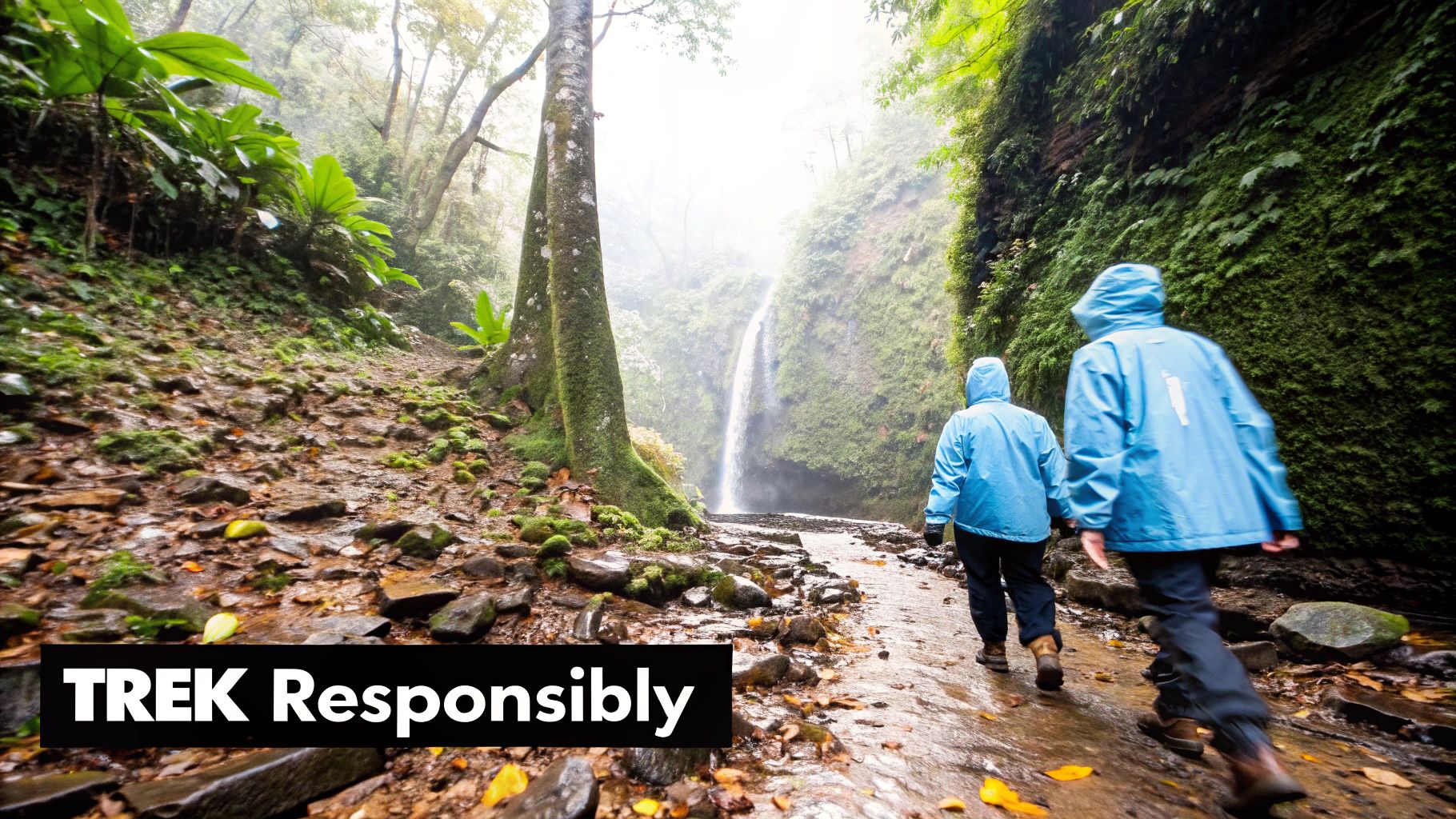
If you believe the best views are the ones you have to work for, then the trails of Agumbe are calling your name. To really get to know this rainforest paradise, you have to leave the road behind and step into its dense, green heart. The trails here aren't just footpaths; they're your ticket to discovering hidden waterfalls, sweeping viewpoints, and a real connection with one of South India’s most precious ecosystems.
Trekking in Agumbe hits all the senses. You'll be pushing through thick jungle, with the non-stop buzz of insects and chirping of birds as your soundtrack, feeling the cool mist on your face. It's a proper adventure that rewards you with sights and sounds most people will never experience.
Popular Trails for Every Adventurer
Agumbe has a trail for everyone, from easy walks to tough, multi-hour treks. It doesn't matter if you're a first-timer or a seasoned pro, there's a path here for you.
-
Onake Abbi Falls: This is one of the most famous treks around here. It's a moderately difficult trail, covering about 8 kilometres of thick forest. Your reward at the end is an amazing view of the waterfall, which drops down like a long pole—that's what "Onake" means. Just remember, you’ll need to get permission from the forest department before you go.
-
Jogi Gundi Falls: This one’s a much shorter and easier trek, making it perfect for families or anyone after a quick dose of nature. The path leads to a really unique waterfall that flows out of a cave into a calm pool, which is ideal for a quick, refreshing dip.
-
Narasimha Parvatha: For the serious trekkers, this is the main event. It's the highest peak in the Agumbe region, and climbing it is a tough, full-day affair that will definitely test your stamina. You'll pass through open grasslands and dense shola forests before you reach the top, where you'll get an unbelievable 360-degree view.
Trekking in Agumbe isn't just about getting to the waterfall or the viewpoint. It's about the whole experience—making your way through leech-filled paths, hopping across bubbling streams, and losing yourself in a world that feels ancient and untouched. This is when you truly get why they call Agumbe 'Hasiru Honnu', or 'green gold'.
Trekking Responsibly in a Fragile Ecosystem
The rainforests of the Agumbe hill station are as delicate as they are stunning. Being a responsible trekker isn't just a friendly suggestion; it’s absolutely essential if we want to protect this place for years to come.
With its elevation of around 660 metres and dense forest, Agumbe is a critical biodiversity hotspot. This place is home to countless species, many of them rare and found nowhere else. The Agumbe Rainforest Research Station was set up here for this very reason—to study and protect this rich environment, especially its most famous resident, the King Cobra. You can learn more about Agumbe's unique geography and its conservation efforts.
Here's how you can do your part:
- Hire a Local Guide: A local guide is worth their weight in gold. They know these trails inside and out, can spot wildlife you'd miss, and make sure you stay safe. Plus, hiring them puts money directly into the local community.
- Leave No Trace: This is the golden rule of the outdoors. Whatever you bring in with you, you take back out. That means all your food wrappers and plastic bottles. Leave the forest exactly as you found it.
- Stick to the Trails: Veering off the marked paths can damage delicate plants and disturb animal habitats. Staying on the trail is the easiest way to minimise your impact.
Preparing for Your Rainforest Adventure
A good trek is all about good preparation. The weather in Agumbe can flip in a second, and the forest has its own set of challenges you need to be ready for.
Essential Packing List:
- Sturdy Footwear: A good pair of trekking shoes with solid grip is an absolute must.
- Rain Gear: Always carry a reliable raincoat or poncho, even if it doesn't look like rain.
- Leech Protection: Leech socks are a lifesaver. Carrying a bit of salt or hand sanitiser can also help deal with them.
- Water and Snacks: Pack at least two litres of water and some high-energy snacks like nuts or energy bars.
- First-Aid Kit: Should have the basics: antiseptic, bandages, pain relief tablets, and any personal medication.
- Navigation Tools: A map, compass, or a GPS device is a very good idea, especially if you're attempting a longer trail.
Being properly prepared means you can relax and have a safe, enjoyable adventure, letting you soak in the raw, wild beauty of the Agumbe rainforest.
Where to Stay and What to Eat in Agumbe
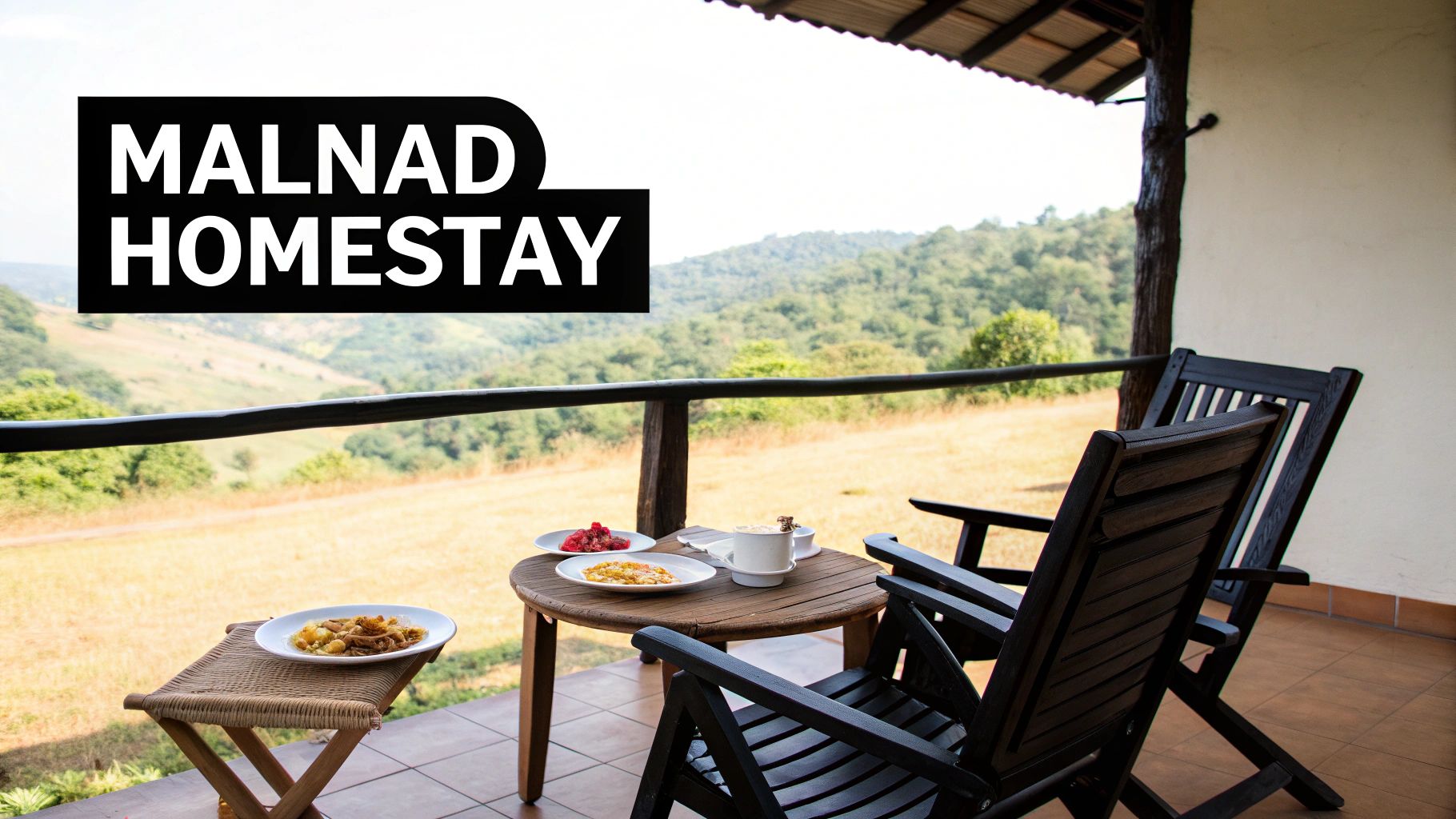
A great trip isn't just about what you see—it's also about where you rest your head and the food you eat. In Agumbe hill station, the options for staying and eating are a direct reflection of the local life: simple, warm, and deeply connected to nature.
You won't find sprawling luxury resorts here. Agumbe's real magic is in its rustic charm and the genuine hospitality of its people. The experience is less about five-star amenities and more about immersing yourself in the local culture.
Finding Your Perfect Stay in the Rainforest
Accommodation in Agumbe is quite limited, so it's a good idea to book your stay well in advance, especially if you're planning a trip between October and February. The village itself is tiny, with only about 500 residents, so the best spots get snapped up fast.
The most popular way to stay is in a traditional Malnad homestay. These aren't just rooms for rent; they're an invitation into a local family’s world, offering a real taste of their culture.
- Homestays: This is the best way to experience authentic Malnad life. You'll get to enjoy delicious home-cooked meals and pick up some great insider tips from your hosts.
- Government Guesthouses: If you're travelling on a tight budget, there are basic government-run guesthouses that offer simple, no-frills lodging. They're clean and do the job.
- Lodges and Small Hotels: You can also find a few modest lodges with private rooms and basic facilities, perfect if you prefer a bit more privacy than a homestay offers.
Choosing a homestay in Agumbe transforms your holiday from a simple getaway into a genuine cultural exchange. You don’t just visit the rainforest; you live alongside the people who call it home, sharing stories over a hot cup of fresh, local coffee.
A Culinary Journey Through Malnad Cuisine
The food in Agumbe is an adventure in itself. Malnad cuisine is famous for its unique flavours, generous use of local spices, and incredibly fresh ingredients. It's hearty, simple, and has a wonderful way of warming you up in the cool, rainy weather.
Most homestays and local eateries serve traditional vegetarian meals that give you a true taste of the region. Many homestay packages actually include all meals, which is super convenient since standalone restaurants are hard to find. It's worth exploring different properties and their offerings to see what kind of food experiences are available.
Must-Try Dishes in Agumbe
While you're here, make sure to try some of these local specialities. Each one has a flavour and texture you won't find anywhere else.
- Akki Rotti: A flatbread made from rice flour, often mixed with onions, chillies, and fresh herbs. It’s a breakfast favourite, usually served with a spicy chutney.
- Neer Dosa: These are delicate, paper-thin crepes made from a watery rice batter. The name literally means "water dosa," and they're incredibly soft. They go perfectly with coconut chutney or a flavourful curry.
- Kashaya: This isn't your average tea. It's a herbal drink made from a blend of spices like coriander, cumin, and ginger. Locals swear by this warming, comforting brew, especially during the monsoon.
- Jackfruit Dishes: Jackfruit grows everywhere here, so you'll find it in all sorts of dishes. When it's raw, it's used in savoury curries, and when it's ripe, it becomes a key ingredient in sweet preparations.
The food in Agumbe is a huge part of the experience. It’s honest, delicious, and gives you the perfect fuel for all your rainforest explorations.
Essential Tips for Your Agumbe Visit
A little prep work can make all the difference for your trip to Agumbe. This isn't your average tourist spot; it’s a quiet village where you play by nature’s rules. A few practical tips will help ensure your visit to this one-of-a-kind agumbe hill station is safe, smooth, and absolutely memorable.
Think of this as a final once-over before you zip up your bags. We’ll cover what to pack, how to handle the lack of modern facilities, and how to be a good guest in this delicate environment.
Packing for the Rainforest
When packing for Agumbe, your main goals are to stay dry and protected. The weather here is famously unpredictable, and the forest is full of critters you'll want to be prepared for.
Here’s a list of must-haves:
- Reliable Rain Gear: A good waterproof jacket or a solid poncho is a must, even outside of monsoon season. Surprise showers are just part of the Agumbe charm.
- Leech-Proof Socks: If you're trekking during or just after the monsoon, leeches will be out and about. These socks are your best friend on the trails.
- Quick-Dry Clothing: Leave the cotton at home; it takes forever to dry here. Synthetic fabrics are the way to go for comfort.
- Sturdy Footwear: A good pair of trekking shoes with a solid grip is non-negotiable for tackling the slippery and uneven forest paths.
Connectivity and Cash Essentials
Part of Agumbe's appeal is its remoteness. It’s a chance to unplug and slow down, but that also means you won't find many modern conveniences.
Mobile signal is very weak and patchy. You might get a faint BSNL signal in a few spots, but don’t rely on it. Critically, there are no ATMs in Agumbe village.
Be ready to go offline for your entire trip and just enjoy the digital detox. It's vital to carry enough cash to cover everything—your stay, food, local transport, and any other expenses you might have.
To make things easier, here's a quick checklist to run through before you leave.
Agumbe Travel Essentials Checklist
| Category | Recommendation | Reason |
|---|---|---|
| Clothing | Waterproof jacket, quick-dry clothes | To stay comfortable in the frequent rain and high humidity. |
| Footwear | Trekking shoes with good grip | Essential for navigating slippery and muddy forest trails safely. |
| Health & Safety | First-aid kit, insect repellent, leech-proof socks | For minor injuries, insect bites, and protection from leeches. |
| Money | Sufficient cash for the whole trip | There are no ATMs in Agumbe village. |
| Electronics | Power bank, torch/headlamp | For charging devices during power cuts and navigating after dark. |
| Mindset | Be prepared for no mobile network | Embrace the opportunity to disconnect and enjoy nature. |
Having these basics sorted will let you focus on what you came for—the incredible nature of Agumbe.
Embracing Responsible Tourism
A trip to the agumbe hill station is a privilege, and with that comes the duty to protect its stunning environment. This area's incredible biodiversity is fragile, and it's on us as visitors to help keep it that way.
Always follow the 'Leave No Trace' rule. That means everything you take in, you must take out—this includes all your food wrappers and plastic bottles. Show respect for the local culture by dressing modestly and being considerate of their customs. By being a mindful traveller, you help preserve the natural beauty that makes Agumbe such a special place.
Your Agumbe Questions, Answered
As you get ready for your trip, you probably have a few last-minute questions. We get it. Here are some quick answers to the most common things people ask about visiting the Agumbe hill station.
We’ve covered everything from family travel to getting around, so you can head out feeling confident and prepared.
Is Agumbe a Good Spot for a Family Trip?
Yes, it’s a fantastic choice, especially if your family enjoys being outdoors and surrounded by nature. Agumbe isn't your typical commercial hill station packed with rides and shops; it's a quiet, rustic place where kids can really connect with the wild.
Spots like Jogi Gundi Falls and the Sunset View Point are easy to get to and perfect for all ages. Just keep in mind that tougher treks, like the one to Barkana Falls, might be a bit much for young children. The best plan is to pick activities that suit your family's adventure level.
How Safe Is Agumbe for Solo Travellers?
Agumbe is widely considered a safe destination for solo travellers, and that includes women. The locals are friendly and the general vibe is very peaceful. Your main safety concerns here aren't about people, but about nature itself.
If you're trekking alone, we can't recommend hiring a local guide enough. The rainforest trails can be tricky to follow, and a guide makes sure you don’t get lost, handle the terrain safely, and avoid any surprise run-ins with wildlife.
What’s the Best Way to Get Around Agumbe?
Agumbe village is super small, so you can easily see it all on foot. To get to the waterfalls and viewpoints scattered around, you have a couple of good options:
- Hire a Local Jeep: This is the go-to choice for most visitors. The drivers know these roads like the back of their hand and can get you right to the start of trails and viewpoints. It's practical and reliable.
- Auto-rickshaws: These work well for shorter trips but might struggle on the rougher roads leading to some of the trekking points.
- Public Buses: There are buses that connect Agumbe to other towns, but the service is limited. They don't run very often and won't take you to all the tourist spots.
You won't find any app-based taxis here, so your best bet is to ask your homestay to arrange a jeep for you. A little planning ahead for transport will help you make the most of your time in the stunning Agumbe hill station.
At Malvan Tour Packages, we handle all the planning so you can focus on the experience. From curated stays to thrilling adventures, we design unforgettable coastal holidays. Discover your perfect getaway with us at https://malvan.co.in.